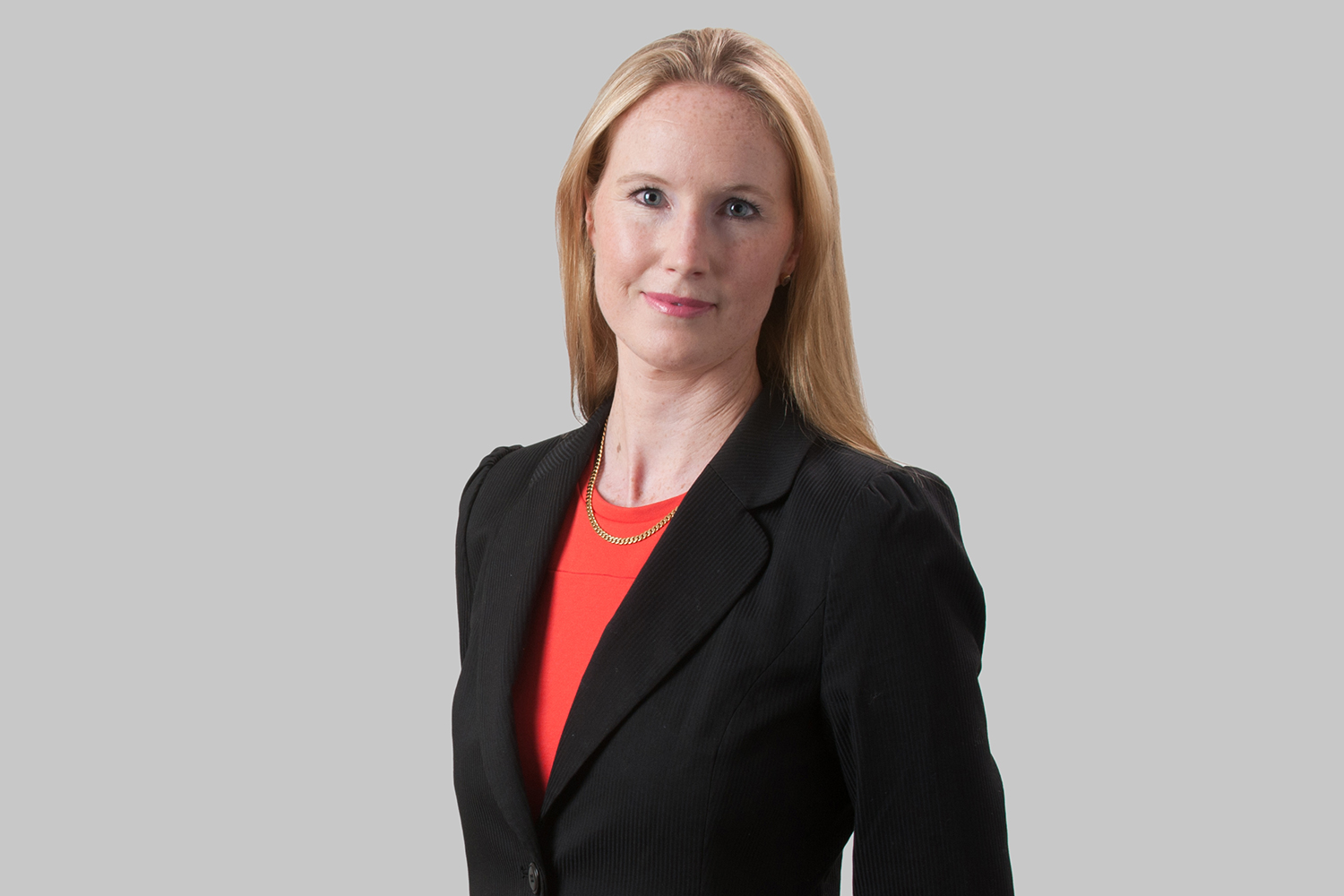
Kate Hodson 凯特·赫臣
Partner and Head of ESG (Legal) 合伙人 | Legal
Hong Kong
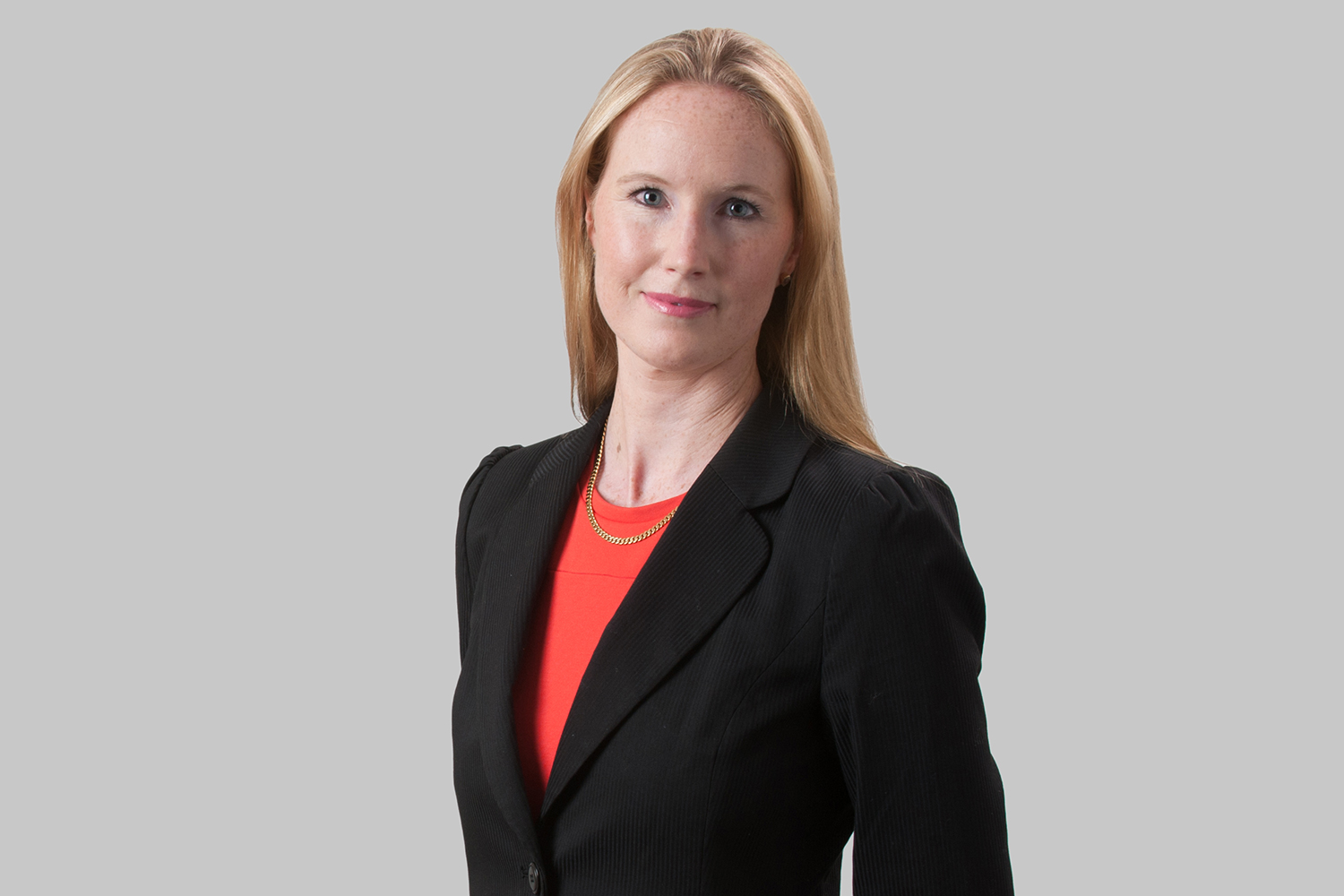
Kate Hodson 凯特·赫臣
Partner and Head of ESG (Legal) 合伙人
Hong Kong


Cayman Islands unit trusts continue to be a popular vehicle for structuring investment funds, including both open-ended and closed-ended structures across a broad range of strategies.
These structures have traditionally been popular among Japanese fund managers and investors, given the similarity to the Japanese domestic investment trust (toshi shintaku), and the associated historical tax benefits. Japanese institutional investors, including life insurers, banks, pension funds and regional financial institutions, continue to search for diversification beyond traditional domestic fixed income assets, with private credit, infrastructure, private equity and venture capital strategies attracting particular interest. Cayman unit trusts may be used for both retail and institutional offerings for alternatives.
Familiarity with these structures has led to an increase in their use by international asset managers targeting Japanese investors, as well as by Japanese focused sponsors. However, despite the historic association with the Japanese market, Cayman unit trusts may also target investors from other domiciles.
Investors may take comfort from the fact that an independent fiduciary will hold the legal title to the fund's assets (rather than a newly incorporated company) and be responsible for controlling the governance of the fund. Unit trusts may also be used alongside other fund vehicle types in typical master-feeder arrangements (frequently with a corporate master fund).
The increased interest in private equity, venture capital, infrastructure and private debt by Japanese institutional investors has seen an increased demand for the structuring of unit trusts with components typically associated with private equity structures. For example, providing for capital commitments and drawdowns as well as creating units which don’t provide an absolute redemption right at the option of the unitholder. The fund terms may not be totally closed-ended, however, and might still cater for redemption windows, subject to restrictions, such as trustee approval or availability of underlying liquidity.
This article provides an overview of Cayman Islands unit trusts, covering structure, trustee oversight, regulation, investor protections and fund formation.
A unit trust is a form of express trust whereby the beneficial interest in the trust is unitised under the terms of the trust instrument. The concept of a unit trust is not defined in Cayman Islands statute and its terms are formalised in the relevant trust instrument.
To understand the nature of a unit trust, one has to look back to the mid-nineteenth century and the origins of the English management trust. This was established pursuant to a deed of settlement providing for the assets of a company to be held by a trustee for the benefit of investors.
Units issued to investors in a unit trust confer a proprietary interest in the pool of investments, which are subject to the trust. However, the trust instrument will usually include a provision to the effect that a unit does not entitle the holder to any particular asset comprised in the trust fund. Therefore, ownership of a unit entitles an investor a right not to a specific investment comprising the trust fund, but simply a right to redeem its share of the pool of assets, represented as a unit, in return for cash based on the underlying value of the trust assets.
A Cayman Islands unit trust will typically be registered as an exempted trust under the Cayman Islands Trusts Law (Revised) on the basis that its beneficiaries are not and will not include any person at any time resident or domiciled in the Cayman Islands. The purpose of such registration is that the trust is then entitled to obtain an undertaking from the Financial Secretary of the Cayman Islands that the trust will pay no Cayman Islands taxes for a fixed period of up to 50 years from the date of the creation of the unit trust. There are currently no corporation, capital gains, income, profits or withholdings taxes in the Cayman Islands and the undertaking provides comfort that this position will be preserved.
A trust is an equitable obligation binding a person, the trustee, to deal with property which is owned and held by them as a separate fund from their own personal property for the benefit of persons, being the beneficiaries of the trust.
Unlike a company, a unit trust has no separate legal personality, rather it is a relationship which relies on the trustee enforcing contractual obligations entered into by the trustee on behalf of the trust. The trustee is responsible for the overall business and affairs of the unit trust and has a duty to act in the best interests of the beneficiaries.
Given the evolution of equitable principles arising out of the fact that trustees hold legal title to the trust property, trustees are therefore generally seen as owing a higher standard of prudence in protecting the interests of the beneficiaries than would be reasonable to impose on a director of a commercial company. The two positions are, however, comparable and directors are subject to similar obligations derived from the relationship of trust and confidence as those that are imposed on trustees. Directors are required to act in good faith in the best interests of the person that they represent (ie, the company), and must not abuse the trust and confidence placed on them. The trustee’s responsibility is, in contrast, directly owed to the beneficiaries collectively.
Beneficiaries can enforce the trustee’s fiduciary duties directly against the trustee, whereas in a corporate structure equivalent fiduciary duties owed by directors will generally only be enforceable by the company and not the shareholders (although there are some limited exceptions to this).
The manager or sponsor of a corporate fund will typically hold the voting shares of the fund and therefore be in a position to change the fund's board of directors at any time in their sole discretion. However, in a unit trust structure, removal of the trustee usually requires the vote of the unitholders under the terms of the trust instrument.
The trustee of a Cayman Islands unit trust will commonly be a corporate trustee in the Cayman Islands and will therefore be required to be licensed as a trust company under the Banks and Trust Companies Act (Revised) or as a mutual fund administrator under the Mutual Funds Law, irrespective of whether or not the unit trust is regulated under the Mutual Funds Act.
The Cayman Islands trustee will be regulated and supervised by the Cayman Islands Monetary Authority (CIMA). Directors sitting on the boards of hedge funds registered under the Mutual Funds Act are generally required to be registered with CIMA, regulated by CIMA (if they are a professional director) or licensed (if they are a corporate director). However, this requirement does not apply in the case of non-regulated Cayman Islands investment structures to directors of the general partner of a fund formed as a limited partnership or to any fund regulated under the Private Funds Act.
At common law, unitholders are personally liable to indemnify the trustee, although this personal liability is usually excluded by the trust instrument. This compares to corporate structures where the liability of shareholders is limited as a matter of law. Investors should ensure that the trust instrument specifically states that their liability is limited (ie, with no requirement to indemnify the trustee).
Unit trusts offer a certain amount of additional flexibility when compared to corporate structures. For example, distributions to unitholders are unrestricted whereas distributions to shareholders are subject to certain restrictions as set out in the Companies Act (As Revised).
Historically, unit trusts could not be set up for unlimited duration as is the case for companies. However, the Perpetuities (Amendment) Act, 2024 introduced a significant change by allowing for the removal of the rule against perpetuities for ordinary trusts, permitting these to last indefinitely if provided for in the trust instrument.
It is possible to establish a unit trust with the manager as a party to the trust instrument, namely a dual party (or two party) trust deed. Managers may have been wary of adopting this approach in case they be deemed to be a co-trustee (although this is unlikely given that the manager would not hold legal title to the fund assets) or be subject to the same fiduciary duties as trustees.
However, recent case law has demonstrated that, depending on the precise nature and scope of its role, the manager may owe fiduciary duties to a unitholder regardless of whether or not they are a party to the trust instrument. In the Jersey law case, Barclays v Equity [2014] JRC102D (which could be persuasive but would not be binding on a Cayman court), the court found that a unit trust can generally be expected to establish a triangular relationship between the manager, the trustee and the unitholders.
The court found that the trustee and the manager owe trustee-like or fiduciary duties and obligations to the unitholders for a number of reasons including that they have control of properties belonging to the unitholders and that unitholders are in a vulnerable position, for they have no right to interfere with the management of their own money. In this particular case, it was noted that virtually all trustee-like functions were allocated to the manager.
A manager may be inclined to prefer a two-party trust deed on the basis that under this arrangement the manager may limit the trustee’s powers and responsibilities. The manager is no longer a delegate of the trustee, appointed under the management agreement, rather the manager’s powers and duties derive from the trust instrument itself (usually in combination with a separate management agreement).
Two party trust deeds are often used when a Cayman Islands unit trust fund is to be publicly offered in Japan. This is because under Japanese law, the issuer of units in the Cayman Islands unit trust must file a securities registration statement with the Kanto Local Finance Bureau and, in practice, this responsibility is usually expected to fall on the manager rather than the trustee. Cayman unit trusts available for retail subscriptions, outside the permitted private placement channels, are normally structured for public offering in Japan and distributed through a Japanese securities firm or other licensed channel.
Before deciding whether to opt for a one or two party trust deed, managers should consult with their legal counsel to discuss the legal and practical implications of each approach. There may also be regulatory requirements to consider.
A standalone unit trust is, as the name implies, a single trust established under a single trust instrument and is most appropriate where the trust fund is used to pursue a single investment strategy. An "umbrella" unit trust is, on the other hand, a structure whereby the trustee holds different pools of investments which are each allocated to separate "sub-trusts".
An umbrella structure is typically used where the manager intends to pursue multiple investment strategies. It may also be used to establish a platform with different investment managers and/or other service providers appointed to each sub-trust.
A master trust instrument is entered into to establish the master trust and this is supplemented from time-to-time to establish one or more sub-trusts by way of a supplemental trust deed. The master trust instrument will provide that each sub-trust is a separate and distinct trust; this is intended to segregate the assets of each sub-trust into separate funds. Therefore, the investors in one sub-trust will only have an interest in the property held by the trustee in respect of that sub-trust and the trustee, as trustee of that sub-trust, will only be entitled to an indemnity out of the assets of that sub-trust for liabilities arising in respect of that sub-trust.
This contractual segregation under the trust instrument goes to the relationship between the unitholders and the trustee and should be extended to dealings with third parties. When the trustee enters into contracts with third parties it must be sure to include limited recourse language so as to limit any third party’s claim to the assets of the relevant sub-trust on whose behalf it is contracting. This is because the trustee is personally liable to the full extent of his personal wealth for liabilities incurred in respect of the trust.
Without including this language (to the extent that the assets attributable to the sub-trust in respect of which the liability was incurred are insufficient to meet that liability), the third party would have a claim against the trustee. The claim would extend only to the trustee’s personal assets. The trustee would not be able to use the assets attributable to the other sub-trusts to meet the liability, as it is prohibited from doing so under terms of the trust instrument. Limited recourse language needs to be carefully scrutinised by the relevant counterparties to ensure the trustee is not limiting its liability beyond that which is reasonable and in line with market practice.
Particular consideration should be given to this point at the structuring stage for unit trusts, which are established on the basis that investor's funds will be drawn down over time to meet the fund's investment liabilities (eg in a private equity fund of funds scenario). As underlying investment vehicles could be resistant to limited recourse language being added to their subscription documentation.
A Cayman unit trust can be established for the purpose of aggregating Japanese investors into a collective investment scheme which invests substantially all its assets into a master fund or flagship fund which may be domiciled in another jurisdiction such as Luxembourg, Ireland, Delaware (or also in the Cayman Islands).
The structuring of this vehicle can aid fundraising in Japan by providing a familiar structure to retail and / or institutional investors. The terms can also be tailored to include Japanese yen denominated classes and currency hedged classes as well as to meet other local conventions and requirements of Japanese distributors. Such vehicles can be illiquid, liquid or semi-liquid to appeal to various regional investors.
While traditionally associated with the Japanese market, Cayman Islands unit trusts are now increasingly being used across Asia for a variety of fund strategies, including fund of funds, hedge funds, private equity, venture capital, infrastructure and private credit. As the trust instrument is a private agreement it can be tailored to meet specific client demands and therein lies its flexibility.
Cayman structures remain the preferred choice for funds targeting Japanese investors because of their flexibility, speed of establishment, tax neutrality and broad familiarity among local investors, global counterparties and service providers. Decades of successful precedent and familiarity with Cayman documentation, governance structures and service providers is reassuring for Japanese investors and their advisers.
In addition, major Japanese securities firms, asset managers and distributors have developed standardised processes with Cayman service providers, simplifying onboarding, maintenance and reporting. There is also an opportunity to provide heightened governance (although capable of being mirrored to a large extent in a corporate structure) on the basis that a professional independent body will hold legal title to the fund's assets and control the operation of the fund. To take advantage of this potential benefit, the experience and professionalism, as well as the location of the trustee will be critical.
Ogier is a professional services firm with the knowledge and expertise to handle the most demanding and complex transactions and provide expert, efficient and cost-effective services to all our clients. We regularly win awards for the quality of our client service, our work and our people.
This client briefing has been prepared for clients and professional associates of Ogier. The information and expressions of opinion which it contains are not intended to be a comprehensive study or to provide legal advice and should not be treated as a substitute for specific advice concerning individual situations.
Regulatory information can be found under Legal Notice
Sign up to receive updates and newsletters from us.
Sign up